
søndag den 29. maj 2011

BODIES AND CULTURE IN THE CYBERAGE
“There is no escape from the meat, the flesh, and cyberspace is nothing
transcendent. These are simply the disguises which pander to man’s
projections of his own rear-view illusions; reproductions of the same desires
which have guided his dream of technological authority and now become
the collective nightmare of a soulless integration” (Plant, 60).
transcendent. These are simply the disguises which pander to man’s
projections of his own rear-view illusions; reproductions of the same desires
which have guided his dream of technological authority and now become
the collective nightmare of a soulless integration” (Plant, 60).
“From the viewpoint of human evolution, VR (virtual reality, GLR)
resembles the invention of fire”(Heim, 69).
resembles the invention of fire”(Heim, 69).
“Running free in cybernetic spaces, proliferating and transmuting at
unpredictable velocities, autonomous digital entities operate at a further
remove from the gaze or touch of the human agent than any prior generation
of forms”(Clark, 130).
unpredictable velocities, autonomous digital entities operate at a further
remove from the gaze or touch of the human agent than any prior generation
of forms”(Clark, 130).
“By prosthetic memories I mean memories which do not come from a
person’s lived experience in any strict sense. These are implanted
memories, and the unsettled boundaries between real and simulated ones are
frequently accompanied by another disruption: of the human body, its flesh,
its subjective autonomy, its difference from both the animal and the
technological”(Landsberg, 175).
person’s lived experience in any strict sense. These are implanted
memories, and the unsettled boundaries between real and simulated ones are
frequently accompanied by another disruption: of the human body, its flesh,
its subjective autonomy, its difference from both the animal and the
technological”(Landsberg, 175).
“VR is less a change of levels than a mutation of circuitry; a matter of
additive sensory-motor reloopings, compressing anthropohistorical
consensus reality into a menu option as it denaturalizes the brain”(Land
203).
additive sensory-motor reloopings, compressing anthropohistorical
consensus reality into a menu option as it denaturalizes the brain”(Land
203).
torsdag den 26. maj 2011
Thinking in Loop: Three videos on iconoclasm, ritual and immortality (Boris Groys)
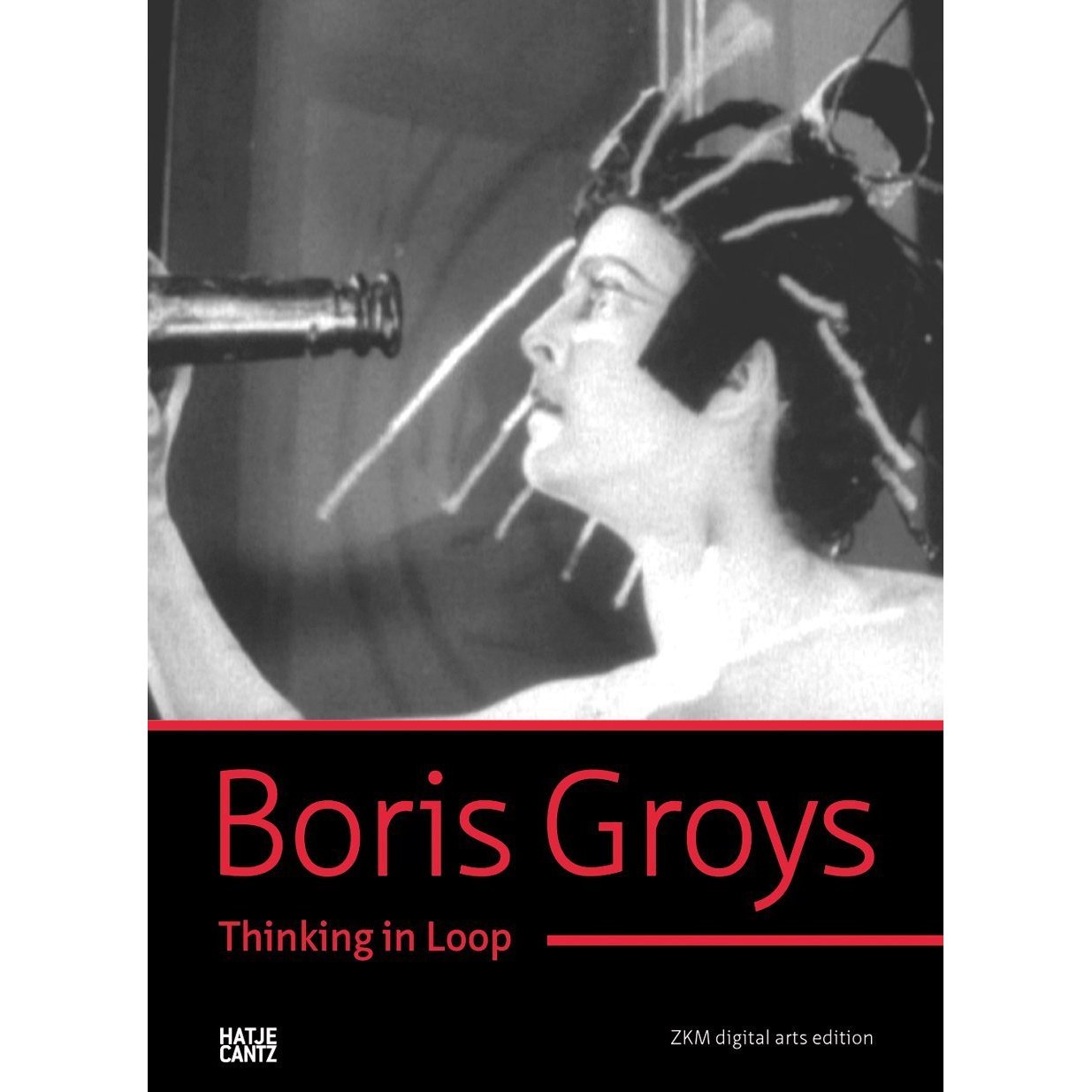
The topic of these videos by art historian and philosopher Boris Groys is, actually, video as a medium: the use of the image within the video, the analogy between video and essay, the difference between private and public use of the video, the video running in loop as a contemporary form of ritual. The film footage is not used here as a mere illustration to make the text more comprehensible, or to make certain theoretical positions more evident. Rather, these video lectures thematize the gap between what we hear and what we see, and reflect on the relationship between image and word in our media-driven world.
Boris Groys, Global Professor at New York University, is a philosopher, essayist, art critic, media theorist and an internationally acclaimed expert on late-Soviet Postmodern art and literature, as well as on the Russian avant-garde. Dr. Groys' writing engages the wildly disparate traditions of French Poststructuralism and Modern Russian philosophy.

Boris Groys, Thinking in Loop, 2008 - Curated by Bart van der Heide
Peter Weibel «Synthesis»
A discourse on language, technology and politics. An endless text, a finite model of infinite time. The speaker says 'on', and presses the ON swtich of the magnetophone. Recorded on the magnetophone is an endlessly looped sequence of the word 'off'. The tape says 'off'. The speaker presses the OFF key, then says 'on', and presses the ON key, and so it goes on. The text is carried out until either the magnetophone breaks down or the speaker gives up, exhausted. The speech process as a dialogue between natural and artificial elements, between spontaneity and rules (machines).
Peter Weibel


tirsdag den 24. maj 2011
mandag den 16. maj 2011
Hartmut Bitomsky - Playback (1995)

Playback is a documentary film about a workshop that took place at the Nederland Fimmuseum in Amsterdam in 1995, and which was supported by the Goethe Institute. The subject of the workshop was the early documentary cinema between 1910 and approximately 1920 - and also making of this video.
The participants included film students, filmmakers, visual artists, film historians and archivists from the Filmmuseum, and surrounding them was a crew of cinematographers, sound technicians and camera and production assistants, who recorded almost everything that was going on.
During the two weeks of sessions more than 30 films were reviewed, a few times in a movie theater and additionally on TV screens, and in discussed in general group sessions, in which reports were prepared and presented by individual participants. Later on, various video installations were set up, which were then again recorded by cameras. Finally, the workshop was presented to the public at the Rotterdam Film Festival, where the films were shown and the first results of the workshop discussed with the festival audience.
What are these old and seemingly old-fashioned films able to tell us today? Do they still convey to us a meaning, and if not, does the difficulty in understanding them lie with us or them?
And is there any need to preserve films if they are no longer capable of communicating to us in a manner that corresponds to our contemporary way or perceiving and understanding reality?
While we are working on coming to terms with these kinds of questions in the workshop, the following quotation from Umberto Eco appeared, who was visiting Amsterdam at that time: 'Creativity is not so much the inventing of new materials as it is the rearranging of materials that are old'. This rearranging of old materials is exactly what the video Playback does. It conjugates, so to speak, old films by using various media and by offering interpretations, and through forms of perception and experimenting with ideas in order to find out how much we are alienated from our (even recent) history and how much work is involved in showing it again.
"Playback" is a documentary of workshop in Amsterdam, for studying films which was made in 1910�`20s.It's important that this film is also a documentary of people studying 'media literacy'.For example there is a sequence that people discuss with each other while they watch fragments of silent films called 'beauty contest'.One says 'They're called 'beauty contest' but they're all beautiful',one says,'No,they might have been forced to face the camera like Pasolini's "Salo",and they look sad.',and another one says,'But there is a part that a boy stands close to a girl as if he protect her'...Probably "Playback" is influenced by the sequence of Rouch's "Chronique d'ete" that people who were filmed comment after projection of the film,but it is a great documentary of the meeting between people and images that separates the time of 80 years,and of inventing an idea and discourse from there. And we can imagine someone makes a documentary of people who discuss while they're watching "Playback" in future.It's a rare documentary opening to the future.
Bitomsky says the collapse of the direct relation between image and reality because of digital image's appearance and disappearance of images in war, are challenges to documentary.It may lead falling down of truth of image,and our judgment under presence and consumerism is submit itself to 'official announcement'?Will it become impossible for us to persuade a trace in an image?If we could be liberated from prompt reaction and secure the space and time to think,we can have something that was potential surface to view. He says "the task of the future documentary will be to create doubt. You could say, the more sophisticated literacy that could read not only images but also the method of working images." Cinema is the only place because it lost position of the mass media. The circulation of preservation, criticism, and creation of image can offer us how to defend ourselves.


mandag den 9. maj 2011
Screen Play
Maria Chavez, Marina Rosenfeld and Tristan Shepherd performing Christian Marclay’s Screen Play, New York City Whitney Museum, 1 July, 2010
torsdag den 5. maj 2011


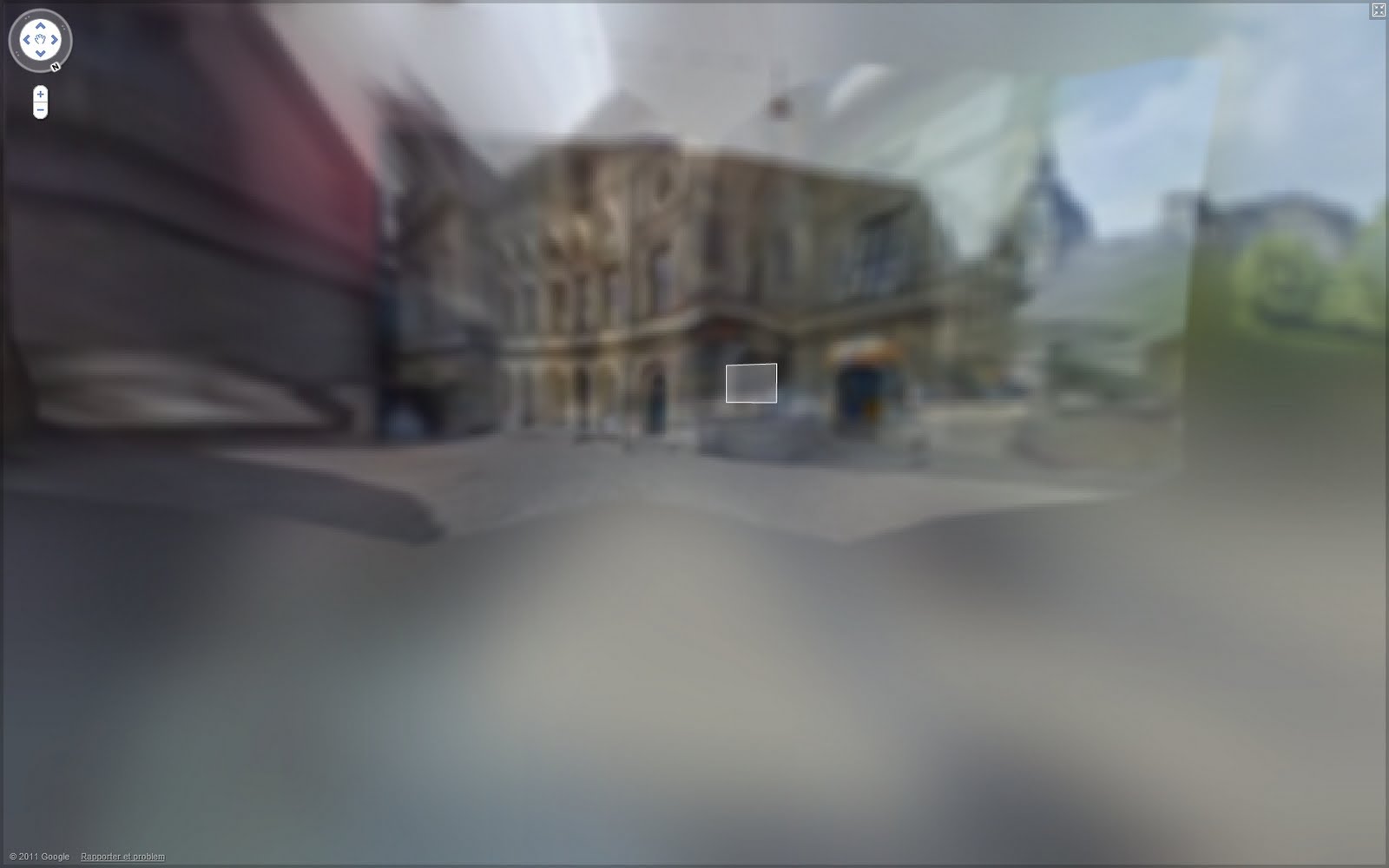

Plakat af 'Inception' i 'Københavns bybillede i google street-view

ca. brede/længde grad: 55.676045,12.567973
onsdag den 4. maj 2011

Visualizing Eleven Dimensions
"..Does anybody here happens to be interested in other dimensions?.."
quantum mechanics... conciousness... and...

Inception (2010)


Travels in Hyperreality

Fra filmen 'Surrogates' (2009)
Nedenunder er et citat fra Umberto Eco's 'Faith in fakes'
kapitlet: Travels in Hyperreality, The Fortresses of Solitude
"Holography could prosper only in America, a country obsessed with realism, where, if a
reconstruction is to be credible, it must be absolutely iconic, a perfect likeness, a "real" copy
of the reality being represented.
Cultivated Europeans and Europeanized Americans think of the United States as the home
of the glass-and-steel skyscraper and of abstract expressionism. But the United States is
also the home of Superman, the superhuman comic-strip hero who has been in existence since
1938. Every now and then Superman feels a need to be alone with his memories, and he
flies off to an inaccessible mountain range where, in the heart of the rock, protected by a
huge steel door, is the Fortress of Solitude.
Here Superman keeps his robots, completely faithful copies of himself, miracles of
electronic technology, which from time to time he sends out into the world to fulfill a
pardonable desire for ubiquity. And the robots are incredible, because their resemblance to
reality is absolute; they are not mechanical men, all cogs and beeps, but perfect "copies" of
human beings, with skin, voice, movements, and the ability to make decisions. For
Superman the fortress is a museum of memories: Everything that has happened in his
adventurous life is recorded here in perfect copies or preserved in a miniaturized form of
the original. Thus he keeps the city of Kandor, a survival from the destruction of the planet
Krypton, under a glass bell of the sort familiar from your great-aunt's Victorian parlor.
Here, on a reduced scale, are Kandor's buildings, highways, men, and women. Superman's
scrupulousness in preserving all the mementoes of his past recalls those private museums,
or Wunderkammern, so frequent in German baroque civilization, which originated in the
treasure chambers of medieval lords and perhaps, before that, with Roman and Hellenistic
collections."
Bergsons cone

..forsøgte at huske forskellige former for repræsentationer af tid (gennem diagrammer).. kan huske at Daniel Birnbaum sidestillede de forskellige i 'Cronology', men kan ikke huske hvor jeg har lagt bogen... måske på loftet.. måske ikke..
The body and the new action film: Motion Capture / Optical motion tracking


Motion Tracking can differ from Motion Capture because in applications such as sports and missiles the object of interest is tracked optically instead of a person.


The Optical Unconscious (Benjamin)
"Walter Benjamin defines the 'optical unconscious' as an unconscious visual dimension of the material world that is normally filtered out from people's social consciences, thus remaining invisible, but which can be made visible using mechanical recording techniques (such as photography and film: slow motion, zoom). In his words, «it is a different nature which speaks to the camera than speaks to the eye: so different that in place of a space consciously woven together by a man on the spot there enters a space held together unconsciously.»"
"A movie camera can be mounted on a speeding locomotive, dropped down a sewer, or secreted in a valise and carried surreptitiously around a city. The camera reveals aspects of reality that register in our senses but never quite get processed consciously. Film changed how we view the least significant minutiae of reality just as surely as Freud's Psychopathology of Everyday Life changed how we look at incidental phenomenon like slips of the tongue. In other words, film serves as an optical unconscious. Benjamin asserts the film camera "introduces us to unconscious optics as does psychoanalysis to unconscious impulses."
In Benjamin's lifetime photographic and cinematographic technologies improved dramatically, thus widening the spectrum of visual experience that can be caught on film. The idea that improved technology can expand our sense perception and make the unconscious visible continues today. Digital video has improved to the point at which an entire television series can be devoted to the filming of ghosts."

"A movie camera can be mounted on a speeding locomotive, dropped down a sewer, or secreted in a valise and carried surreptitiously around a city. The camera reveals aspects of reality that register in our senses but never quite get processed consciously. Film changed how we view the least significant minutiae of reality just as surely as Freud's Psychopathology of Everyday Life changed how we look at incidental phenomenon like slips of the tongue. In other words, film serves as an optical unconscious. Benjamin asserts the film camera "introduces us to unconscious optics as does psychoanalysis to unconscious impulses."
In Benjamin's lifetime photographic and cinematographic technologies improved dramatically, thus widening the spectrum of visual experience that can be caught on film. The idea that improved technology can expand our sense perception and make the unconscious visible continues today. Digital video has improved to the point at which an entire television series can be devoted to the filming of ghosts."

Andre Masson Automatic/Unconscious Drawng, 1930s
tirsdag den 3. maj 2011

A custom view - animated cameras
Cameras present a scene from a particular point of view. Camera objects simulate still-image, motion picture, or video cameras in the real world.
Free camera

When a Free camera is initially created, it points at the negative Z-axis of the active viewport. The single parameter for Free cameras defines a Target Distance—the distance to an invisible target about which the camera can orbit.
Target Camera

Target cameras always face their target.
Neo’s Liberal Movement: The New Action Film as a Handmaiden to Globalism
"As far back as the 1930s, Walter Benjamin wrote about the dizzying cinematic effect of the placeless camera moving in shot-countershot while occupying multiple perspectives. He believed that such protean perspective broke down the viewer’s defenses against the power of its vision as the director dissected and reconstituted reality. One can only guess what he would have made of the new subjective movement in The Matrix’s opening scene, where the camera, like the object of its gaze, seems to know no limits. It raises up, it circles, it is above, then close-up, the range of focus deepens, then it does a 320 degree sweep around the room, cutting back and forth around 25 times in 30 seconds. "
Harun Farocki's 'Images of the World and the Inscription of War' (1989)


Paul Virilio's 'War and Cinema'
What defines cinema, Virilio writes, is not the production of images but their manipulation: pans and tracking shots, zooming in and out etc. Cinema is the manipulation of dimensions, producing depth through movement. As has been noted by artists and writers before Virilio, this aligns the experience of watching movies with that of flying. And while pioneer directors were coming to terms with this unique aspect of cinema, he argues, aviation in the early 20th century became less about breaking speed records and more about a new way of seeing.
Aerial photography was introduced during the American Civil War (via hot air balloons), but came into its own during the first World War. It epitomizes Virilio’s logistics of perception, in that it requires a large-scale operation, including planning and post-production.
Aerial photography was introduced during the American Civil War (via hot air balloons), but came into its own during the first World War. It epitomizes Virilio’s logistics of perception, in that it requires a large-scale operation, including planning and post-production.


Abonner på:
Opslag (Atom)